Financial Statements, Reports and Disclosures
Fiscal Year 2027: Operating Budget at a Glance
Fiscal Year 2027 advances Georgetown’s mission by investing strategically in growth, expansion, and innovation — introducing new graduate programs, expanding certificate offerings, diversifying research funding beyond federal sources, and streamlining administrative processes to drive revenue and efficiency. Crucial to this growth are ongoing infrastructure investments , the expansion of our campus footprint in Washington, DC, and around the world, and strategic upgrades to the technology and physical spaces that enrich the student, faculty, and staff experience. This year, the university increased its financial aid budget for the upcoming academic year to $292 million, the largest financial aid commitment in the university’s history.
The following FY 2027 figures reflect the budget estimates and planning assumptions approved by Georgetown’s Board of Directors in June 2026. They should not be interpreted as actual financial results, which will vary based on operational, economic, and other factors throughout the fiscal year.
FY 2027 Budget Expenses
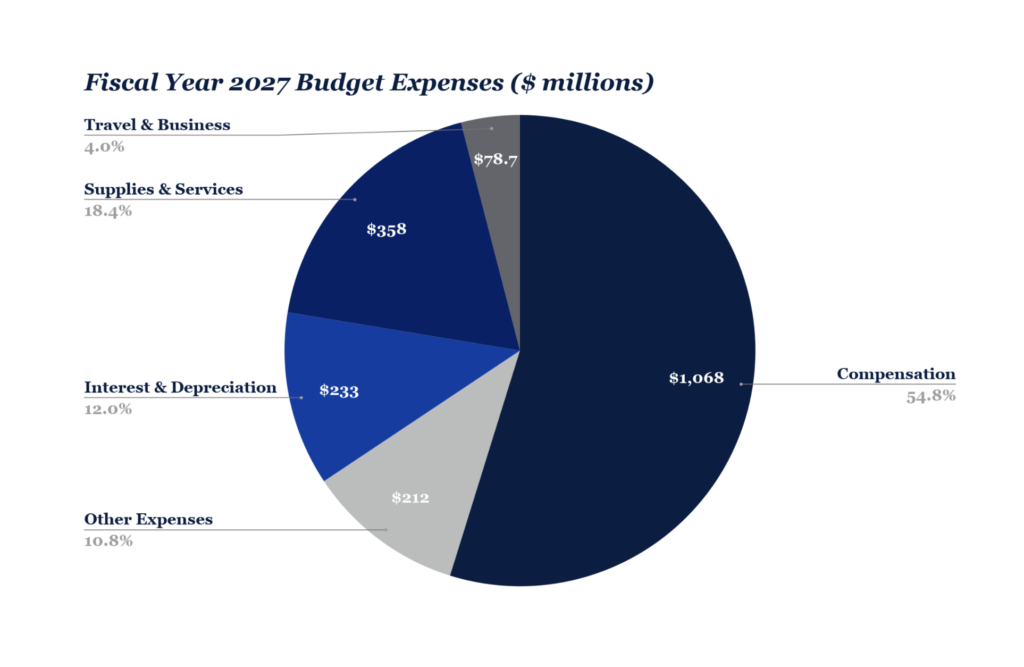
Total expenses in the FY 2027 operating budget amount to $2 billion. These budgeted expenses account for rising compensation and operating costs and align resources directly with the university’s daily operations, strategic priorities, and core educational mission for the upcoming fiscal year.
FY 2027 Budget Revenue
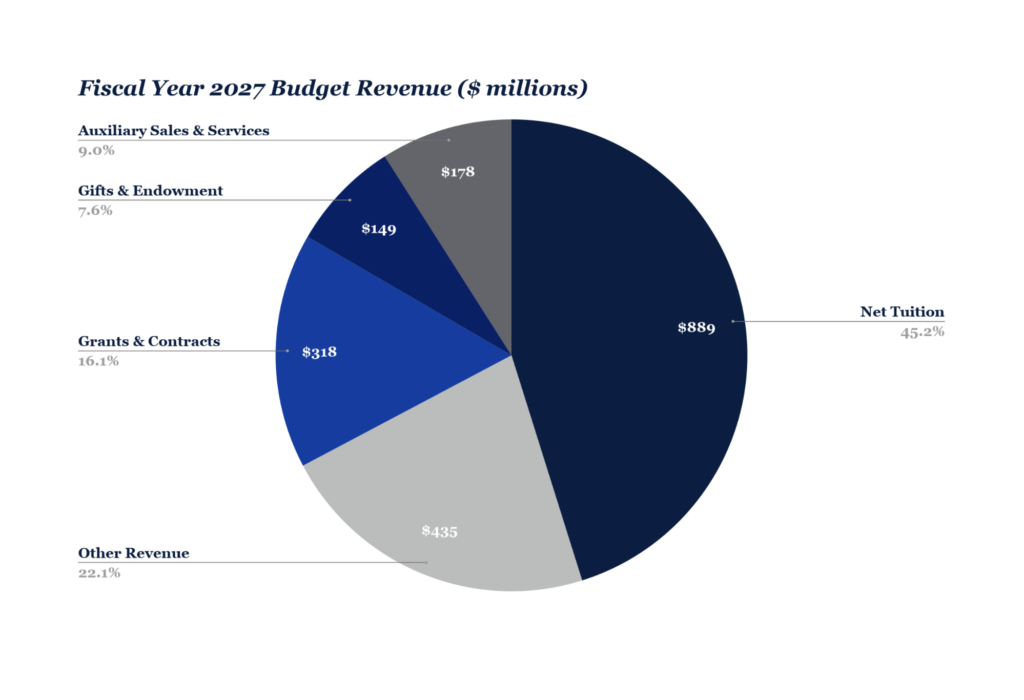
Total revenue in the FY 2027 operating budget amounts to $2 billion, driven by net tuition, research grants, and philanthropic support. Other revenue includes endowment income, athletics events, royalties, professional services, conferences, student activities, and other activities consistent with the university’s mission.
Note: Georgetown University provides these financial documents for informational purposes only. All information provided is subject to change without notice. Rating agency reports represent the opinions of rating agencies and are not evaluations intended to protect investors in the university’s securities. These ratings are not statements of fact nor are they recommendations to purchase, hold or sell any security. Each rating should be evaluated independently of any other rating.